Serving Hanford, CA and surrounding areas. (559) 794-9855
Hanford concrete takes a beating from 100-degree summers, alkaline soils, and agricultural dust. A properly applied sealer stops oil, water, and grime from soaking in - and keeps your driveway or patio looking clean with far less effort.
Concrete sealing in Hanford puts a protective layer on your driveway, patio, or slab that keeps water, oil, and dirt from soaking in - most residential sealing jobs take one day, with the surface ready for foot traffic in 24 hours and vehicle traffic in 48 to 72 hours.
In Hanford, sealing is not optional upkeep - it is how you slow the damage that the San Joaquin Valley climate causes to unprotected concrete. Summer temperatures regularly push past 100 degrees, and concrete surfaces can reach 140 degrees in direct sun. That heat stress, combined with the daily expansion and contraction cycle, breaks down the surface layer of concrete much faster than in cooler parts of the state. Kings County soils are also alkaline and push salts up through slabs, leaving the white chalky patches that appear on Hanford driveways after rain or irrigation. Sealing - done over a properly cleaned surface - helps manage that. If your slab has existing cracks or rough patches that need to be smoothed first, that work falls under our concrete grinding and surface preparation service before the sealer goes down.
Sealing also matters for polished concrete floors - a densifier or topcoat applied after polishing protects the surface and keeps it from absorbing spills. Whether your project is an outdoor driveway or an interior finish, the principle is the same: a clean, dry surface plus the right product for your climate equals protection that holds up.
Pour a small cup of water on your driveway or patio and watch what happens. If it soaks in and darkens the concrete within a few seconds, your sealer is gone and the surface is unprotected. In Hanford's heat, unprotected concrete absorbs oil, dust, and agricultural residue much faster than it would in a cooler climate - so once the sealer is gone, staining and surface wear pick up speed.
If you notice white or grayish powder on your concrete - especially after your yard sprinklers run or after winter rain - that is a sign that salts from Hanford's alkaline soil are migrating up through the slab. This is common in Kings County and means your concrete is absorbing moisture from below. Sealing after a proper cleaning helps slow this process.
When the top layer of concrete starts to flake off in small chips or the surface feels rough where it used to be smooth, the concrete has been absorbing moisture and breaking down over time. This is called spalling, and it is especially common on Hanford driveways that are 20 or more years old and have never been sealed or maintained.
If you have a stamped or colored patio that used to look rich but now looks washed out and gray, the sealer has worn off and UV exposure has faded the surface. Hanford's intense summer sun is hard on decorative finishes. Resealing restores the color and protects the pattern from further fading under the Valley sun.
We apply two main categories of sealer, and the right choice depends on your surface and your goals. Penetrating sealers soak into the concrete and become nearly invisible - they do not change the look of the surface, but they block moisture from getting in. They are the better fit for driveways and walkways that need long-lasting protection without a visible sheen. Surface sealers sit on top of the concrete and add a visible finish - anything from a matte sheen to a high gloss - and are popular for patios, stamped concrete, and decorative surfaces where appearance matters as much as protection. For finished interior floors like polished concrete, we apply a densifier or guard coat as part of the polishing process to protect the surface from within.
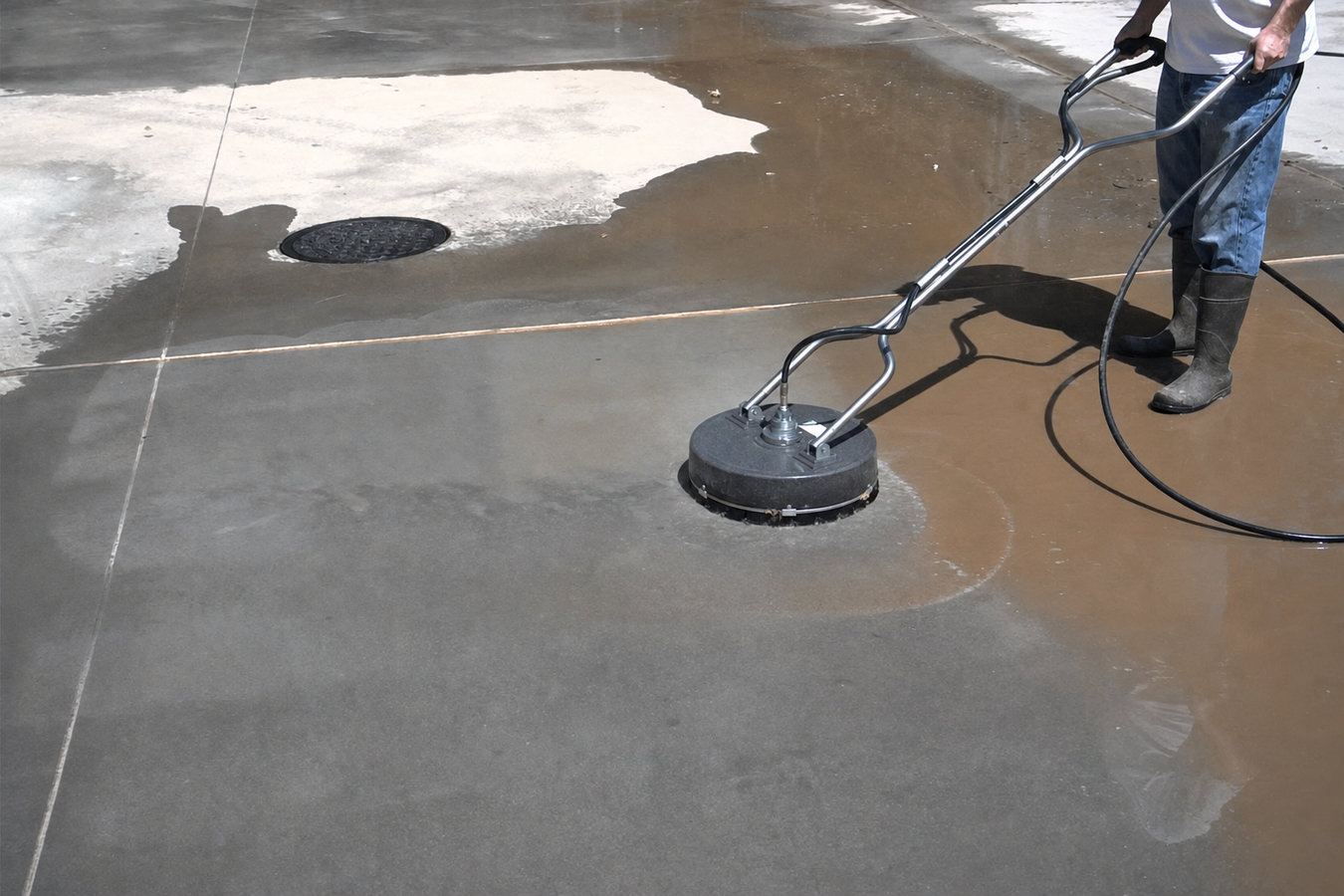
Every sealing job starts with a thorough surface preparation step - pressure washing, treatment of any oil or salt deposits, and full drying before a single drop of sealer goes down. Sealing over a dirty or damp surface is the number one cause of early sealer failure. If cracks need to be filled or the surface needs grinding before sealing can proceed, that work is handled through our concrete grinding and surface preparation service. If your concrete needs a full resurfacing before sealing, our concrete resurfacing and overlays service covers that.
Best for driveways and walkways where long-lasting moisture protection is the priority and a natural-looking surface is preferred.
Suited for patios, stamped concrete, and decorative surfaces where a visible sheen and enhanced color are part of the goal.
Applied to polished concrete interiors as part of the finishing process - hardens the surface and protects the polish from wear and staining.
For driveways, pool decks, or steps where a glossy sealer would otherwise reduce traction - a grip additive is mixed into the coat before application.
Hanford sits in the southern San Joaquin Valley, where concrete surfaces face conditions that are genuinely harder on sealers than most of California. Summer temperatures regularly exceed 100 degrees and concrete surfaces in direct sun can hit 140 degrees - that heat degrades surface sealers faster than in cooler climates, meaning Hanford driveways and patios need attention every two to three years rather than the four to five years you might expect from a product data sheet written for average conditions. Scheduling sealing in spring or fall - when temperatures are below 90 degrees - also gives the sealer the best conditions for curing correctly and bonding well. The alkaline soils and irrigation patterns in Kings County add another layer: salts migrating through slabs leave deposits that must be cleaned off before any sealer will stick. A contractor who skips that cleaning step is just burying the problem. The American Concrete Institute provides guidance on preparation standards that we follow on every project.
A large share of Hanford homes were built in the 1960s through 1990s, and many of those driveways and patios have never been sealed or were sealed once and forgotten. Concrete that old is porous and often stained - it needs more prep time than newer concrete, and it rewards a thorough job more than any other surface type. We work across the full service area, including customers in Selma and Sanger, where the same soil and climate conditions affect concrete in the same ways.
We will ask a few quick questions about your surface type, size, and condition. You will hear back within one business day. We schedule an in-person visit rather than giving you a phone quote - the condition of your concrete determines the actual work involved.
We inspect your concrete for cracks, stains, salt deposits, and old sealer residue. You get a written estimate that covers prep and application - no surprises on the invoice. This visit is also your chance to ask which sealer type is the better fit for your surface and goals.
Move vehicles, outdoor furniture, planters, and anything else sitting on the concrete. You do not need to clean anything - that is part of our job. Clearing the area the day before keeps the project on schedule.
We pressure wash, treat any stains or salt deposits, and let everything dry fully before the sealer goes on. After application, plan to stay off the surface on foot for 24 hours and keep vehicles off for 48 to 72 hours. We will tell you specifically when the surface is ready and how to maintain it going forward.
We come see your concrete in person and give you a written price - no guessing, no phone estimates.
(559) 794-9855We do not quote sealing jobs over the phone. The condition of your surface - how old it is, whether it has salt deposits, how stained it is - determines what the prep work actually involves and what the job costs. You get a written price that reflects your specific concrete, not a generic square-foot rate.
Sealing over a dirty, damp, or salt-covered surface is the single most common cause of early failure. We pressure wash, treat deposits, and confirm the surface is fully dry before application. That step is not optional - it is what separates a sealer that lasts three years from one that starts peeling in the first winter.
We plan sealing jobs for spring and fall whenever possible, and schedule morning starts to avoid peak afternoon temperatures. If your project falls in summer, we adjust the approach - product selection and application timing - so the sealer cures correctly rather than baking before it bonds. Local knowledge matters here.
You can verify our California contractor's license through the CSLB website before any work starts. We carry liability insurance and workers compensation coverage on every crew. Ask for proof - a contractor who hesitates to provide this is worth being cautious about.
Sealing is straightforward when the preparation is done right. We do not skip that step to save time, and we do not leave until you know exactly when the surface will be ready and what to expect from it going forward. You can also read more about the California Contractors State License Board to understand what verified licensing means for your project.
When a slab is too damaged to seal over, a resurfacing overlay creates a new surface layer before protection is applied.
Learn MoreA polished interior floor requires a guard coat or densifier as part of the finishing process - sealing and polishing go hand in hand.
Learn MoreCall today or submit an estimate request. We visit your concrete in person, give you a written price, and schedule the work at a time that fits Hanford's conditions.