Serving Hanford, CA and surrounding areas. (559) 794-9855
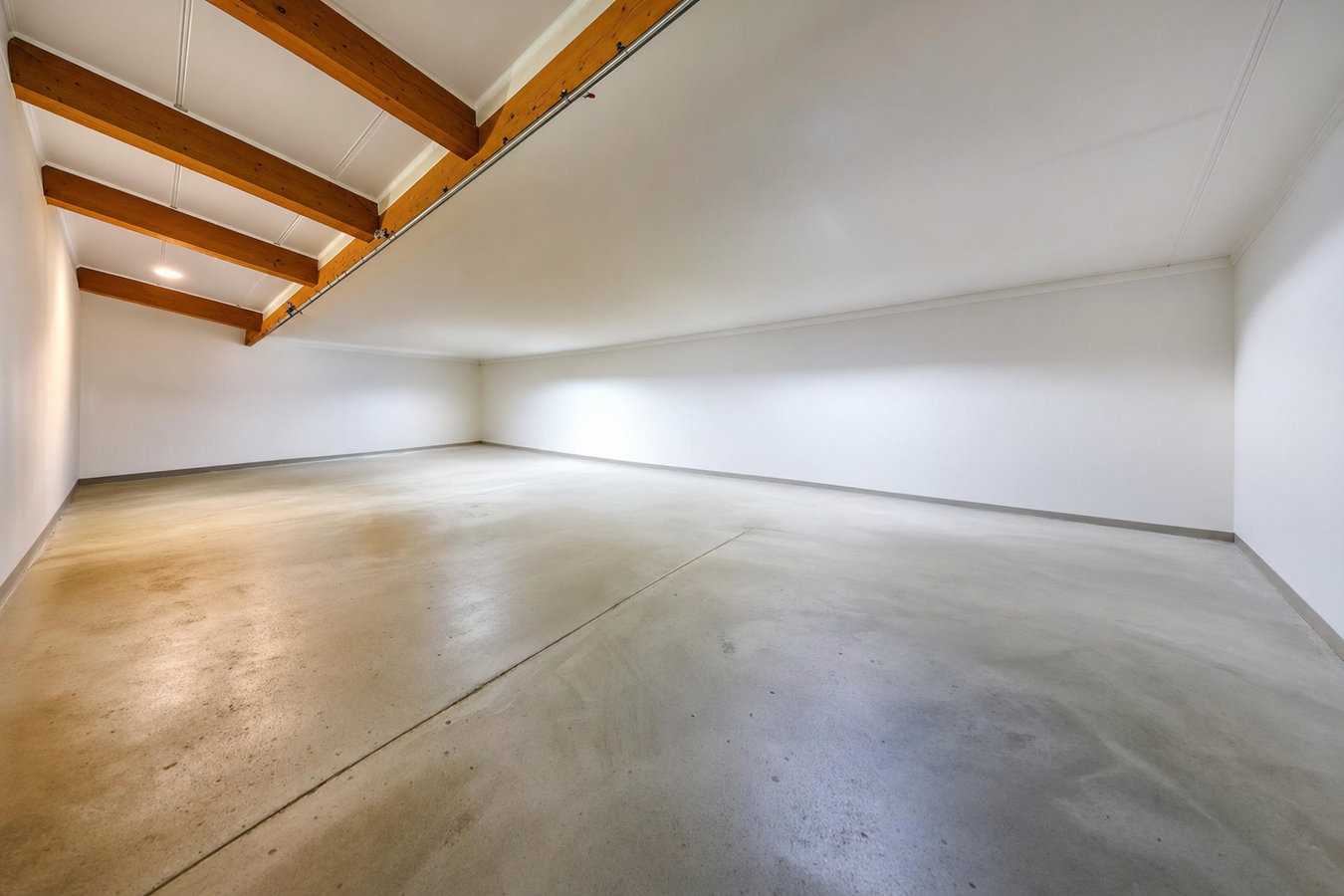
We test for moisture before we recommend anything - because that is why most basement floors fail in the first place. Get a finish that bonds correctly and holds up through Hanford winters and summers.
Basement flooring in Hanford starts with your existing concrete slab, which can be coated, polished, or overlaid depending on its condition and your goals, most projects take one to three days of active work followed by 24 to 72 hours of cure time before you can use the space again.
The most common reason basement floors fail in this area is moisture. Hanford sits on clay-heavy San Joaquin Valley soil that pushes vapor upward through concrete slabs throughout the year - especially during wet winters. Applying a new finish without testing for moisture first is the main reason coatings peel or bubble within a year or two. We test the slab before recommending any product, which is why our finishes hold up. If your basement floor needs grinding or crack repair before a finish can go down, that work is handled through our concrete grinding and surface preparation process.
Whether you are finishing a basement gym, workshop, laundry room, or extra storage space, the right floor makes the area easier to maintain and much more pleasant to use. A sealed or coated slab also eliminates the constant fine-dust shed that bare concrete produces.
That chalky white film is called efflorescence, and it is a sign that water has been moving through your slab and leaving mineral deposits behind. In Hanford, where clay soils push moisture upward during wet winters, this is common - and it means any new flooring needs a moisture barrier before it goes down, or it will not last.
Small hairline cracks in concrete are normal, but if cracks seem to be growing or have a slight lip on one side, the slab may be moving. The San Joaquin Valley clay soils can cause seasonal shifting, and it is worth having a contractor assess whether the cracks are cosmetic or something that needs addressing before a new finish goes on.
Bare concrete that has not been sealed or coated sheds fine dust constantly. If you are finding a gritty film on everything in your basement, a sealed or coated floor solves that problem completely and makes the space much easier to maintain.
If an existing epoxy coating or adhesive-backed tile is starting to fail, moisture or poor surface prep was almost certainly the cause the first time around. A full removal and proper reapplication - with moisture testing done first - gives you a floor that actually stays put rather than repeating the same failure.
After moisture testing and surface preparation, we offer three main finish paths for basement floors. Epoxy coatings bond to the concrete surface and add color, shine, and a stain-resistant layer that handles foot traffic, chemical spills, and the humidity swings that come with Hanford winters. They are the most popular choice for garages and basements because they are affordable, fast to apply, and cover a lot of surface imperfections. Polished concrete is a different process - we use diamond grinding to make the slab itself smooth and reflective without any coating on top, so there is nothing to peel or chip. It works best on slabs already in decent shape and gives a longer-lasting result.
For floors with significant cracks, old adhesive, or uneven spots, a self-leveling overlay or skim coat can create a flat, clean surface before the finish goes on. All surface prep work - including grinding and crack repair - is handled through our concrete grinding and surface preparation service. We also apply protective sealers as a standalone step for customers who want to protect an existing bare slab without a full coating - that falls under our concrete sealing service.
Best for homeowners who want an affordable, colorful, and stain-resistant finish that covers slab imperfections and handles regular foot traffic.
Ideal for slabs in decent condition where a durable, no-peel surface with a reflective finish is the priority - nothing applied on top means nothing to fail.
Suited for floors with significant cracks, old adhesive residue, or unevenness that needs to be leveled before a finish coat can go down.
For basements where moisture vapor is the primary concern - a barrier coat applied before any finish ensures the coating above it bonds and stays bonded.
The San Joaquin Valley clay soils around Hanford expand when wet and contract when dry. That seasonal movement stresses concrete slabs and pushes moisture vapor upward through the floor - even when there is no visible water on the surface. A contractor who does not understand this behavior will skip moisture testing, apply the wrong product, and leave you with a coating that peels by the second winter. We factor in Kings County soil conditions and the local climate on every basement project before we recommend a finish. Hanford also sees tule fog from November through February, which raises ambient humidity and affects how concrete coatings bond and cure - we plan around the forecast, not just the calendar.
A significant portion of Hanford homes were built in the 1940s through 1970s, and older slabs from that era often have more surface history - previous coatings, adhesive residue from old tile, and hairline cracks that need to be filled. We see this regularly throughout the area, including in homes we have worked on in Corcoran and Lemoore. Epoxy and concrete coatings are sensitive to heat as well - scheduling work in the cooler months produces better adhesion and longer-lasting results. You can also review the American Concrete Institute for guidance on concrete surface preparation standards.
You describe the space - size, current condition, how you plan to use it. We reply within one business day and come prepared for the site visit. You do not need to have every answer ready ahead of time.
We visit to inspect the slab condition, check for cracks or old coatings, and test for moisture - especially important in Hanford where clay soils push vapor upward. You get a written quote that breaks down what prep involves and what finish options fit your budget.
The crew grinds the concrete to remove old coatings or adhesive, then fills cracks and low spots. If moisture is present, a barrier coat goes down before anything else. This step is what makes the finished floor last - it is not optional.
Once the slab is clean and repaired, the chosen finish goes on in layers with drying time between coats. After the final coat, the floor needs 24 to 72 hours before light foot traffic. The contractor does a final walkthrough with you and leaves you with simple care instructions.
We test the slab and give you a written quote before any work starts - no obligation, and no estimate over the phone without seeing the floor first.
(559) 794-9855We test for moisture vapor emission before recommending any finish. This step is skipped on most failed basement floor jobs in the area. Matching the product to what your slab actually needs is what separates a floor that lasts from one that starts peeling within two years.
Older Hanford homes can uncover surprises - old adhesive, hairline cracks, or moisture issues that were not visible at first glance. We tell you what we find and what it will cost to fix before we do the work, not after. No number growing once we are already in your basement.
Epoxy and concrete coatings do not bond well when slab or air temperatures are too high. We schedule work during cooler months - late fall through early spring - when conditions are right for a proper cure. This is especially relevant in Hanford where summer heat arrives early and stays late.
Our contractor license is current and verifiable through the California Contractors State License Board. We have worked on homes throughout Kings County and understand the clay soil conditions, housing stock, and climate factors that affect basement floor performance here specifically.
Basement floors in Hanford fail for predictable reasons - moisture, heat, and skipped prep work. We address all three before the first product goes down, which is why our finishes hold up where others have not.
Remove old coatings, adhesive, and surface contamination from your slab - the foundational step that determines whether any new finish will actually bond and last.
Learn MoreProtect a bare or finished concrete slab from moisture, dust, and stains with a penetrating or topical sealer suited to Hanford's climate conditions.
Learn MoreLate fall through early spring is the ideal window - coatings bond and cure better in cooler conditions, and your schedule is more flexible before the hot months set in.