Serving Hanford, CA and surrounding areas. (559) 794-9855
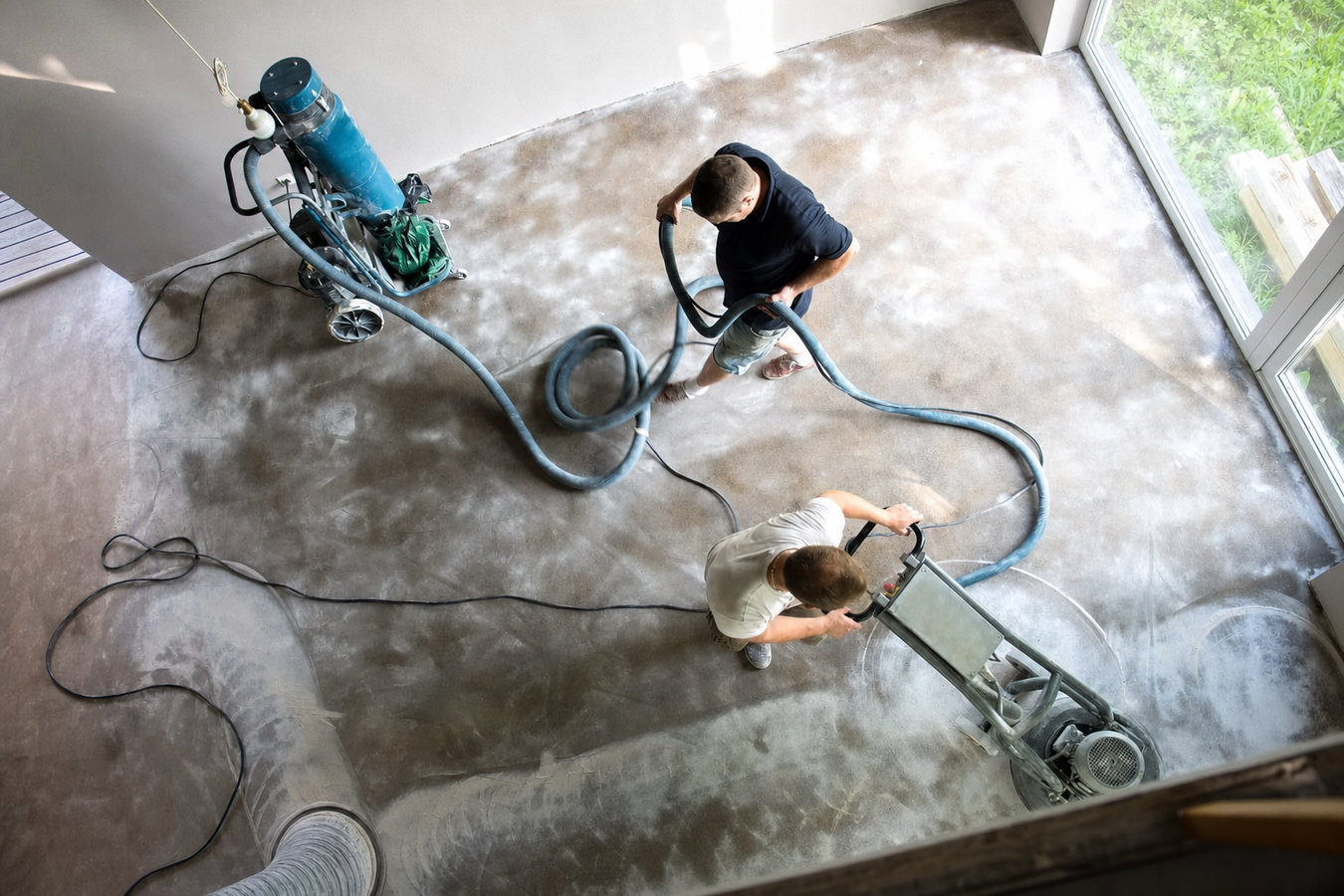
Old coatings, failed adhesives, and damaged slabs do not have to stop your project. We strip and remove concrete floors cleanly and safely so whatever comes next - new coating, polished finish, or tile - bonds correctly and lasts.
Concrete floor stripping in Hanford is the process of removing old coatings, sealers, adhesives, or surface layers from a concrete slab so the floor is back to bare, clean concrete - most single-room or garage jobs are completed in one day, with the slab ready for the next phase within 24 to 72 hours depending on drying conditions.
Think of it the same way you would stripping old paint from a wall before repainting. The goal is a clean, properly profiled surface that gives whatever comes next - a new epoxy coating, polished concrete, tile, or flooring - the best possible surface to bond to. Trying to apply new flooring over old adhesive or a failed coating almost always leads to peeling, lifting, or an uneven surface within a year or two. Stripping gets it right from the start. In older Hanford homes, this prep step also gives you a chance to see what the slab actually looks like before committing to a finish, which matters when the goal is a polished or high-performance surface. Once your floor is stripped and prepped, our epoxy floor coatings service is one of the most popular next steps for garages and utility spaces.
Sometimes the job is not just a surface strip - the entire slab needs to come out. That happens when concrete has cracked through completely, heaved badly, or was poured incorrectly. Full removal is a different scope than surface stripping, and a good contractor will tell you clearly which one your situation calls for rather than defaulting to the more expensive option. After removal, proper surface preparation of the replacement slab is where our concrete grinding and surface preparation service picks up.
If the surface of your garage, basement, or utility room floor is lifting in patches, bubbling up, or flaking off when you walk on it, the existing coating has failed. This often happens when a coating was applied over a surface that was not properly prepared - or when moisture from below pushes up through the slab. In Hanford, summer heat combined with clay-soil movement can accelerate this kind of failure, so it is worth addressing before it gets worse and the damage reaches the slab itself.
If you have pulled up old carpet, vinyl tile, or laminate flooring and the concrete underneath is covered in a sticky, discolored residue, that adhesive needs to come off before anything new goes down. Trying to lay new flooring over old adhesive almost always leads to an uneven surface and poor adhesion - the new floor will not lie flat and may start lifting within a year or two.
A persistent smell coming from a concrete floor can mean that old coatings or adhesives have absorbed moisture and are breaking down. In Hanford homes built in the 1950s through 1970s, this sometimes involves older materials that were not designed to hold up over decades. Stripping the surface down to bare concrete is often the only way to fully address the source of the smell rather than covering it.
If you can see cracks running across your concrete floor - especially ones that have grown over time or where one side sits higher than the other - the slab may have moved due to the clay-heavy soil beneath it expanding and contracting through Hanford's wet winters and dry summers. Before any new flooring or coating goes down, the surface needs to be assessed. Stripping back the existing layers is often the first step to understanding what is happening underneath.
We handle both surface stripping - removing coatings, sealers, and adhesives while leaving the slab in place - and full slab removal when the concrete itself needs to come out. The right method depends entirely on what is on your floor and what condition the slab is in underneath, which is why we assess in person before recommending anything. For most residential jobs in Hanford, surface stripping using diamond grinding or scarifying equipment gets the floor back to bare concrete in a single day. We use dust-controlled grinding systems throughout, which keeps airborne particles contained - an important factor when working near living spaces. After stripping, the floor is typically ready to move directly into the next phase, whether that is a new epoxy floor coating or a surface grinding step to achieve the right profile for the finish you have chosen.
For older Hanford homes - particularly those built before 1980 - we raise the question of hazardous materials before any stripping begins. California requires that materials suspected of containing asbestos be tested before they are disturbed. We either handle that step or refer you to a certified inspector. This is not a delay - it is the legally required process that protects you, your family, and the crew doing the work. When stripping is complete and the floor is ready for the next step, concrete grinding and surface preparation handles the profiling work that ensures new coatings bond correctly.
For floors with old epoxy, acrylic, or sealant layers that need to come off - using diamond grinding equipment to return the surface to bare concrete.
Best for garages or rooms where carpet, vinyl tile, or laminate has been pulled up and the old adhesive residue remains on the slab.
Used when the concrete itself needs to come out - cracked through, heaved, or structurally unsound - using demolition equipment with proper debris hauling included.
Suited for older Hanford homes built before 1980 where testing for asbestos-containing materials is required before any mechanical stripping begins.
A significant portion of Hanford's housing was built between the 1940s and 1970s - solid homes, but ones that often have original floor materials that were never designed to last indefinitely. Floor adhesives, vinyl tiles, and underlayment from that era frequently contain asbestos or other materials that require careful handling under California law before any stripping work begins. The San Joaquin Valley Air Pollution Control District enforces the relevant air quality rules in Kings County, and a contractor who works in Hanford regularly will already know the process. Homeowners in Lemoore face the same housing-stock considerations, since both communities have similar mid-century construction patterns.
Timing matters in Hanford. The Valley's extreme summer heat can cause stripping chemicals to evaporate too quickly and can make freshly exposed concrete dry unevenly - which affects how well a new coating bonds afterward. Late fall through early spring is the best window for this type of work, and a contractor with genuine local experience will adjust their process accordingly rather than using the same approach year-round. The Valley also generates agricultural dust year-round, and a freshly stripped surface left exposed on a windy day can be contaminated before the next step begins - something to account for in scheduling and containment. Homeowners in Hanford and across Kings County should also be aware that California has strict requirements for concrete demolition debris disposal - broken concrete must go to a facility that accepts construction waste. The CalRecycle Construction and Demolition Debris program outlines those requirements, and your contractor should handle disposal as part of the job - not leave you to figure it out.
We will ask what room or area is involved, what is currently on the floor, and how old the home is. You do not need all the answers - just describe what you see and we take it from there. We respond within 1 business day.
We come out to look at the floor in person before giving you a firm price. We check the slab condition, look for signs of moisture, and - if your home was built before 1980 - discuss whether hazardous material testing is needed first. You receive a written estimate listing exactly what is included and how debris disposal will be handled.
Before the crew arrives, the area needs to be completely cleared - furniture, appliances, and stored items. In Hanford, it is worth closing windows on windy days since valley dust can settle on a freshly stripped surface quickly. The crew covers nearby doorways if needed to contain dust within the work area.
The crew runs grinding or scarifying machines across the floor until the old coating or adhesive is fully removed, then cleans up the debris. Before leaving, we walk you through the finished surface - showing what the bare concrete looks like and pointing out anything you should know about before the next phase begins.
Free written estimate with debris disposal included. We respond within 1 business day.
(559) 794-9855For any Hanford home built before 1980, we raise the asbestos question before work begins - not after something gets disturbed. We either arrange testing or refer you to a certified inspector, following the requirements set by the San Joaquin Valley Air Pollution Control District. Skipping this step creates legal and health exposure that falls back on the homeowner.
Concrete grinding creates a significant amount of fine silica dust - a real health concern when work is done inside a home. We use vacuum-assisted grinding systems that keep airborne particles contained rather than spreading them through your living space. In Hanford, where valley dust is already a constant, this matters especially for interior jobs.
In California, broken concrete and demolition material cannot go in a standard dumpster - it has to go to a facility that accepts construction and demolition waste. We include hauling and proper disposal in every removal job and spell it out in writing before you agree to anything. Surprise disposal fees are one of the most common ways concrete jobs run over budget.
Some floors need surface stripping only. Others need full slab removal. A few need hazardous material testing first. We look at the floor in person and tell you clearly which situation you are in - without defaulting to the most expensive option. You can verify our license and credentials on the CSLB website before you sign anything.
Good prep work is invisible once the new floor goes in - but its absence shows up fast. A floor that was properly stripped and profiled gives the next coating or finish the best possible surface to bond to, which is the difference between a result that lasts years and one that starts failing within a season. For air quality and dust requirements specific to this region, the San Joaquin Valley Air Pollution Control District is the governing body that sets the rules contractors in this area follow.
The most popular next step after stripping - a properly applied epoxy coating transforms bare concrete into a hard, durable, easy-to-clean floor surface.
Learn MoreAfter stripping, grinding profiles the slab surface so new coatings or overlays bond correctly and last - the mechanical step between bare concrete and a finished floor.
Learn MoreBeat the summer heat - get your project on the calendar now while cooler weather makes for cleaner results and better bonding.